
HVAC · SEO
HVAC SEO for owners of heating and cooling companies who want the phone to ring without buying leads. We build the site, write a page for each service and each town, and run your Google Business Profile. One report a month tells you what moved.


Trustpilot
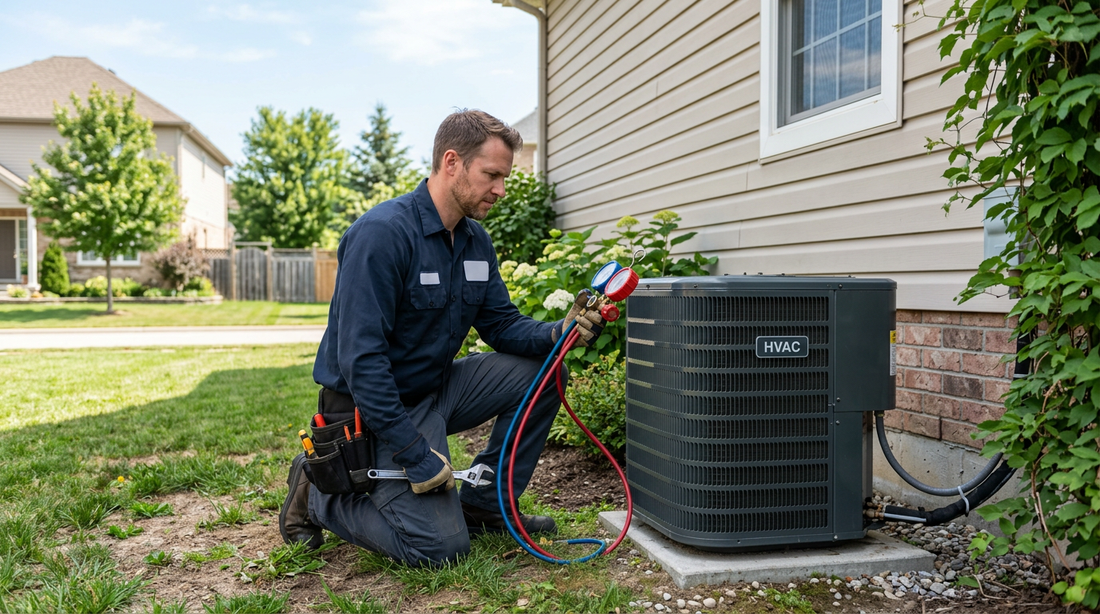
HVAC SEO is the work that makes your heating and cooling company show up when someone nearby searches for AC repair, a furnace fix or a new system. It covers the pages on your site, the technical side of the site, your Google Business Profile, and a monthly report that shows what moved.
In short
Someone with no heat searches on a phone, taps and calls your number. There is no lead seller in the middle and no shared name to race three other companies for. That is a different kind of call to take.
HVAC SEO does not clock out at five. The pages, the profile and the reviews keep doing their job on the days you are flat out in a crawlspace. The work builds over months, so the quiet weeks still count.
A page for each service and each town gives search engines something to match when a search includes a town name. One page that lists nine towns in a paragraph does not do that. Your service area is the whole point of local search.
Your HVAC SEO, website, review funnel, missed-call text back and automated follow-up all run together. Fewer gaps for booked jobs to fall through. One place to look when you want to know what happened to a lead.
Our HVAC SEO is local SEO, and it is five pieces of work that run every month.
The content of each page tuned for its keywords. Search visibility and ranked keywords watched month to month, Google's changes followed, and the pages that sit close to ranking pushed further.
Your Google listing checked so it is live and correct. The links pointing at your site watched for new ones, lost ones and quality, the right service area targeted, and checks that Google is crawling you.
Load speed, mobile display, SSL, redirects and the sitemap. No page hidden from Google by mistake, schema.org structured data in place, and Search Console checked for crawl and security errors.
Set up and kept accurate. That profile is what shows in the map results, so the hours, the services, the phone number and the service area have to be right.
Traffic, keyword rankings, links, site health and what to do next. Written in words you can read between calls, not a dump of charts nobody explains.
You show us the trucks, the towns and the services you sell. We show you the system and how it fits your company.
Website, service and town pages, Google Business Profile, review funnel, missed-call text back and the inbox.
We walk you through what is live and how to use it on a phone, because that is where you will be using it.
Pages tuned, profile kept accurate, links and site health watched, and the HVAC SEO report lands each month. This builds over months, not days.
The five steps between a homeowner's search and your tech in the driveway. HVAC SEO covers the first three.
1. The search
Someone types "ac repair near me" or "furnace not working" on a phone.
2. What shows up
Google Maps results and the page results both get a look. Your profile and your town page need to be in there.
3. The tap
Call button or short quote form. A slow page on a phone ends it right here.
4. Someone answers
If you cannot pick up, missed-call text back answers for you. A call nobody answers is the easiest job to lose.
5. The job and the review
Job done, then a text goes out asking for a review, which feeds the next search.
Someone with no heat at nine at night is not browsing. They want a number to call and a truck in the morning. That one fact changes the whole job.
HVAC SEO is local SEO for a service business. It is not general digital marketing, and it is not social media. A post can show off a clean line set and a crew in matching shirts. It does not answer the question the homeowner is asking, which is who is open, who is close, and who can get here today.
Your searches are a service plus a place. AC repair in your town. Furnace replacement. Heat pump install. Tune-ups and maintenance plans. A homeowner types four or five words and expects a local answer. That means a page for each service and a page for each town you drive to, which is the same approach we take for every trade on our trades list.
It also means the words on the page have to match the words people use. Some say furnace, some say heater, some just say the unit. Your pages can cover all of it without reading like a list.
The first hot week of summer and the first cold night of fall look nothing like March. The shape of the search changes too, from emergency repair to replacement to maintenance. The work you do in the quiet months is what puts you in front of people in the busy ones. There is more on that in our notes on the contractor slow season and in our guide to HVAC marketing strategies.
The trade keeps growing. The Bureau of Labor Statistics projects employment of heating, air conditioning and refrigeration mechanics and installers to grow 11 percent from 2025 to 2035, much faster than the average for all occupations. More techs means more companies, and the map shows only a handful of businesses at a time. So the small things carry weight: a correct profile, a page that matches the search, a site that loads on a phone.
If you hold accreditations, put them on the page. ACCA is the national trade association for HVACR contracting businesses, and credentials you have earned belong where a homeowner can see them.
Some owners call this SEO for HVAC and some call it HVAC SEO. Same work. Here is what our SEO service covers in full.
There are two places a heating and cooling company can land when someone pulls out a phone. Knowing which one you are missing tells you where the work goes.

Google Maps results sit near the top, usually three businesses with stars, hours and a call button. Google's own help page says local results are based mainly on relevance, distance and prominence, and that prominence is partly about links from other sites and the reviews you have.
Distance is the part owners argue with. A company ten minutes closer to the searcher can show above you, even when your trucks are newer and your techs are better. You cannot move your shop. The levers you can pull are the rest of it: a profile that is accurate, reviews that keep coming in, and a site that search engines can read.
Under the map sit the page results. This is where your own site does the work. If someone searches a town name and you have a real page about that town, you have something to rank. If you have one page that lists nine towns in a sentence, you have almost nothing to rank.
This is the same ground we cover in our local SEO for contractors guide, and the same way we approach SEO for plumbers. The trade changes. The structure does not.
Above the Google local results you will often see paid placements for local services, including Local Services Ads with the green check. Those are a different thing with a different bill, and they stop the day the spending stops. We handle the SEO side. If you want to understand the paid side first, read our guide to Google Local Service Ads.
Some people tap the map. Some scroll to the page results. Some read both before they dial. The HVAC SEO work we do feeds both sides: the profile and the reviews on one, the pages and the site on the other. Booked jobs come from being there when the homeowner is already looking.
Rankings are worth little if the page they land on is slow, confusing or built for a desktop nobody is using. The site is the floor everything else stands on.

AC repair gets a page. Furnace replacement gets a page. Heat pump install, duct work, maintenance plans, each one gets a page. Then each town you cover gets a page too. That gives search engines a clear match for the search, and it gives the homeowner a page that reads like it was written about their problem in their town.
Call button at the top, where a thumb lands. A short quote form, not a long questionnaire. Your service area and your hours where someone can find them in two seconds. Those are web design decisions made for the call, not for a portfolio. We walk through more of them in our guide to HVAC contractor marketing.
Google publishes Core Web Vitals as a set of metrics for loading, interactivity and visual stability, and says to aim for the largest piece of content appearing within 2.5 seconds of the page starting to load. The Web Vitals guidance puts the same number on it. On a phone in a driveway with one bar, that is the difference between a call and a back button.
Structured data matters too. Google documents LocalBusiness structured data as the way to describe a business, down to the hours and the departments. We put schema.org markup on the site so the information you already have is in a form Google can read without guessing.
SSL in place. Redirects pointing where they should. A sitemap Google can find. No page hidden from Google by mistake. None of it shows up in a photo of a finished install, and all of it decides whether the work ever gets found.
HVAC contractors are not the only trade that needs this. The same build sits under our work on SEO for home services, because a homeowner with a broken anything behaves the same way.
Not all of the work happens on your own pages. A good chunk of it happens on the things Google reads about you from somewhere else.
Your Google Business Profile is set up and kept accurate. Hours, services, service area, phone number, categories. When a number is wrong or an address moved two years ago, the profile quietly costs you calls and nobody in the shop ever finds out. We check it as part of the monthly work, and there is more detail in our guide to optimizing your Google Business Profile.
Reviews are part of how a homeowner picks between three HVAC businesses that all look the same on a phone. After the job is done, our 5-star review funnel sends the customer a text with a link. That is it. No clipboard, no awkward ask at the door, no tech having to remember.
The steady part is what counts. A pile of reviews from years ago reads differently than a page where new ones keep landing. We cover the habit side of it in how to get more reviews.
Owners ask about link building. Here is what we do and nothing more: we watch the links pointing at your site. New ones, lost ones, and the quality of what is there. If something good disappears, you see it in the report. If something odd appears, you see that too.
We also check that the right service area is being targeted and that Google is crawling the site, because a page nobody crawls is a page nobody finds.
None of this moves in a week. A profile fixed in March is still working in July, and a review left today still counts next winter. That is the part of HVAC SEO that pays back the companies who keep showing up.
A lead is only a lead if somebody answers. You can do everything right on the search side and still lose the job in the time it takes a homeowner to give up and dial the next company.

The worst days for this are the exact days the searches spike. First hot afternoon of the year, first freeze in October. Every phone in the office is lit up, every tech is already on a call, and that is when the new caller gets voicemail.
When you cannot pick up, the caller gets a text right away. They know you exist, they know you saw them, and they have a thread open instead of a dial tone. For a company that sells emergency work, that is hard to beat.
Texts, calls and messages land in one place, so the person at the desk is not checking four apps. New leads get a text automatically, without anyone remembering to send it. The whole thing runs on a business phone line, so your cell number is not the company number anymore.
The system gets you the conversation. What happens next is on whoever picks up. If the answers in your shop change depending on who grabs the phone, our contractor phone script is a decent place to start fixing that. A heating and cooling call is usually short and the homeowner is usually stressed, so having the same three questions ready every time is worth more than it sounds.
Heating and cooling is a repeat trade. The furnace you fixed in January sits in a house with an AC unit that will want a tune-up in May. One-click campaigns go out to the customers you already have, which is work your HVAC SEO does not have to do twice.
You should never have to wonder whether anything happened. One report lands each month, and it covers five things.
Google describes Search Console as a service for monitoring and troubleshooting your site's presence in Search. It confirms Google can crawl the site, shows which queries bring your pages up, and shows which sites link to yours. We check it, and when it flags a crawl or security error we fix it instead of waiting for you to notice the phone going quiet.
We also follow Google's own Search documentation as it changes, because the guidance moves and a site built to last year's rules slowly stops performing. Keeping up with that is part of the monthly work.
Owners ask about call tracking. Here is what you get: a business phone line and one inbox holding every call, text and message. You can see what came in, when, and whether anyone answered. That is the number that matters, because traffic you never speak to is just traffic.
You do not need to learn a dashboard. The report is written so you can read it in the truck between calls and come away knowing three things: what we did, what moved, and what is next. If a line of it does not make sense, ask and you get a plain answer.
You will get plenty of pitches. Here is how to sort them without becoming an SEO person yourself.
Not what the plan is. What the work is. Ours is five things: on-site SEO on the content of your pages, off-site SEO on your listing and your links, technical SEO on speed and crawling and structured data, your Google Business Profile kept accurate, and the report. If the answer is vague in the sales call, it will be vaguer in month four.
You should know what the report looks like before you agree to anything. Traffic, rankings, links, site health, next steps. If nobody can show you what lands in your inbox each month, you are buying a promise.
Nobody controls Google's results. The best HVAC SEO work is honest about that. The pages, the profile, the reviews and the site get better month after month, and the direction shows up in the report. Anyone putting a date on a position is guessing.
A form stops sending. A phone number changes. A page goes down on the hottest week of the year. The question is how fast a person picks it up.
No contracts. It is affordable on purpose, because the owners we build for have trucks to fuel and payroll to meet. It is simple to use, so nobody on your team needs training to answer a text. The demo call runs about 20 minutes, the build takes 7 to 10 days, and a launch call walks you through it. You can read more about who we are first if you want to.

November 18, 2026
HVAC Marketing Strategies That Book More Jobs in 2026
The HVAC marketing strategies that actually book jobs in 2026: Google Business Profile, local SEO, LSAs, reviews, email and direct mail, in priority order.

November 11, 2026
HVAC Contractor Marketing: The Complete 2026 Guide to Booking More Jobs
A practical guide to HVAC contractor marketing covering budgets, channels, the customer journey, and KPIs that actually predict booked revenue.
See everything we do to help you grow your business so you can implement it yourself or let us do it for you.
Book A Call

Demo Call
(20 mins)
It's actually a sales call, we just didn't want to scare you. But seriously... we'll answer all your questions, show you any features you have questions about, and show you live client accounts & results.
We build your system
(7-10 days)
Fill out a basic onboarding form with your business details. After we have the correct information, we'll get to work on building your new website & marketing system.
Launch Call
(25 mins)
We'll walk you through your new website & marketing system, answer any questions you have, and show you how "everything" works... And by everything, we’re really just talking about pressing two buttons.


"Highly recommended, they are here to help us contractors that don't like to deal with the website stuff. It feels like you have partner looking out for you that's actually helping you succeed."
-Adam
See All

"I've been working with stonesystems for the last few months and it's been absolutely amazing. If you're out there and you need someone that's gonna be there for you... we love working with stonesystems"
-Dale
See All
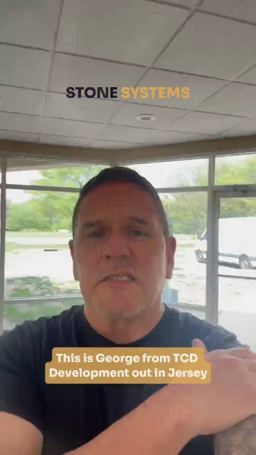
"Shoutout to Kai and Remy for an amazing job that they did doing my website. I've been a pain in the butt every now and then but they did it right. Check them out, you won't be dissapointed."
-George
See All

"If you are looking for someone to get that phone ringing, they're the right fit for you! I'm so happy with them!"
-Cody
See All

"They are the absolute best at what they do. They built me a new website and within 10 day's I got my first unpaid for Lead! Best money spent with Kai and StoneSystems"
-Armando
See All

"After going through 2-3 other people i finally found someone that told me the truth. Really easy to work with and very respectable. I would recommend them to anyone!"
-James
See All

"Ever since he implemented the new website and landing pages, it's been nothing but great and our conversion has gone way up. We started getting calls almost immediately."
-Manny
See All

"Getting 5 star reviews has always given me anxiety, Kai and his team have taken all that away and I have seen a significant increase in business since I started working with them. I would recommend them to anyone!"
-Wendy
See All

"Nothing but professional and awesome in every way, they are absolutely great to work with"
-Netane
See All

"I would highly recommend going with Stone Systems, my business has ramped up, literally overnight and their prices are very affordable. Feel free to reach out to me personally with any questions about them!"
-Frank
See All

"I've seen a significant improvement in my business. Stone Systems has made my life so much easier!"
-David
See All

"Thank you to Kai and Stone Systems , our company finally has the web presence it needs and our sales and profits have grown significantly! We look forward to working with them for many years to come!"
-Rick
See All

"Their business marketing systems have helped us a lot. Anytime I need anything I can always give them a call. They're super helpful with everything they do, I would recommend them to anybody"
-Luckie
See All

"Before I started working with Stonesystems I was paying $1500/month with another service that just was not working for me. Stonesystems is super affordable and they do a fantastic Job!"
-Lopaka
See All

"It's been great and all I needed was one sale a month to pay for the service. Since I signed up i've gotten quite a bit more than that. I would recommend them to anyone!"
-Adam
See All

"They made me a brand new website, super professional and it's been absolutely amazing. I cannot say enough good things about theme. It turned those 100s of viewers into 100s of clients!"
-Mason
See All

"First i thought it was a scam, but then it turns out they're just a really good company at a really good price. I would recommend them to anyone!"
-Matt
See All

"They've made it so easy with all their automations and the awesome website. I can't thank them enough and you should all definitely check them out"
-Ryan
See All

"He really got everything going well. I'm getting organic leads now that don't cost me any money. I would recommend them to anyone!"
-Scott
See All

"Big shoutout to Kai and Stone Systems for helping me with my website and getting me more leads. I would recommend them to anyone!"
-Zach
See All